How to Fall Asleep Fast: 10 Methods Ranked by the Evidence
- The best-supported quick win: a warm shower or bath one to two hours before bed. A meta-analysis found it shortens the time to fall asleep.
- The strongest long-term method: only go to bed when sleepy, and get up if you are not sleeping. It is a core part of the approach sleep specialists rate most highly.
- Cut caffeine at least six hours before bed and put screens down in the last hour or two.
- The "military method" and the "cognitive shuffle" are popular online but have never been tested in a published trial.
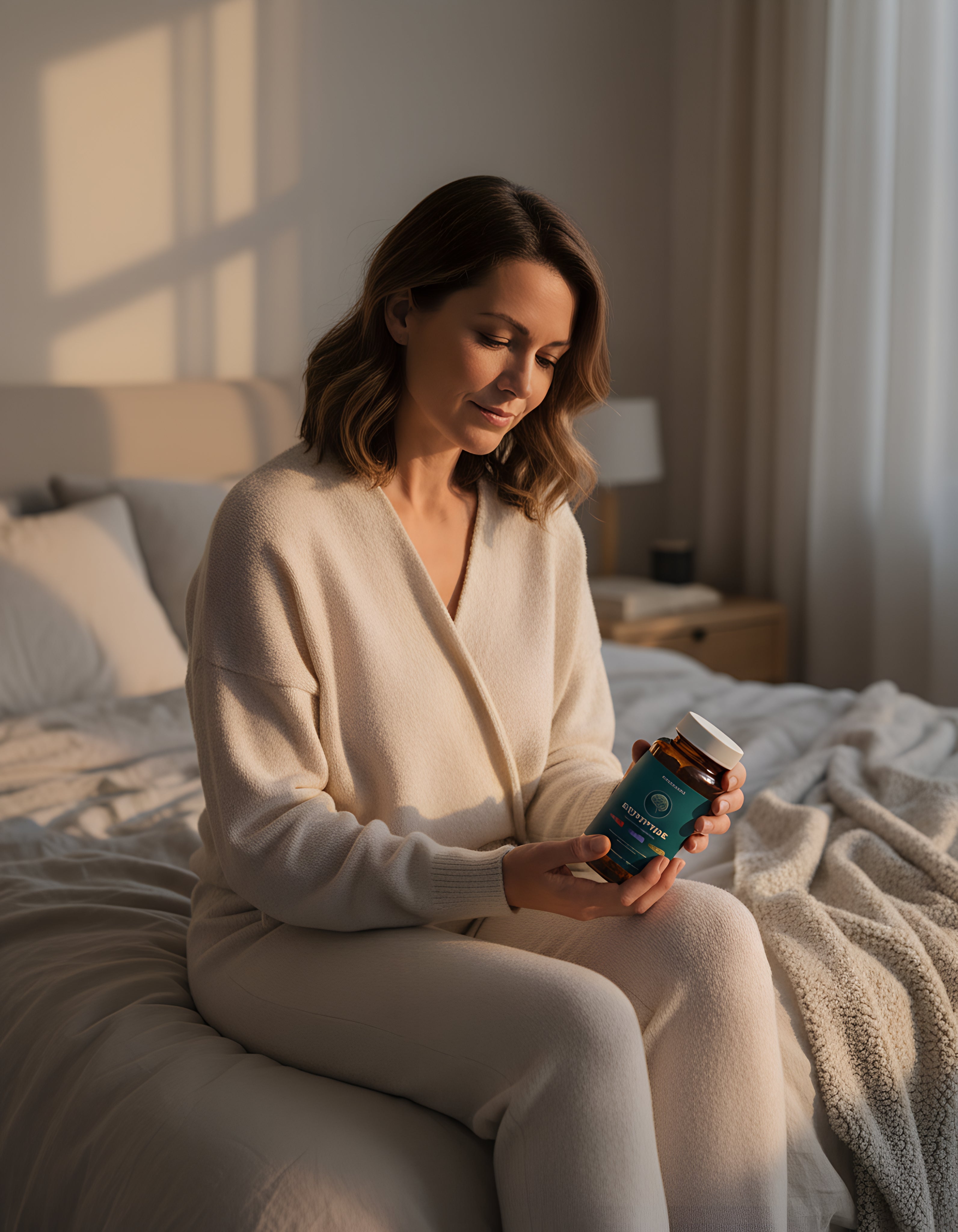
Most advice on falling asleep fast is untested. We went through the published research and ranked what we found, strongest evidence first. None of these is instant, but several have measurable effects.
1. A warm shower or bath, one to two hours before bed
Evidence: good. A meta-analysis of 17 studies found that a warm shower or bath at 40 to 42.5 °C (104 to 108.5 °F) improved sleep quality, and when taken one to two hours before bed for as little as 10 minutes it shortened the time to fall asleep (Haghayegh et al., 2019). Timing is the point: the warmth draws blood to your skin, and your core temperature then drops faster, which is one of the body's own signals for sleep.
2. Use the bed only for sleep
Evidence: good. Go to bed only when you feel sleepy. If you are not asleep after what feels like a while, get up, do something calm in dim light, and come back when sleepy. Keep the same wake-up time every day. This "stimulus control" is rated at the highest level of evidence by the American Academy of Sleep Medicine (Morgenthaler et al., 2006). It is part of cognitive behavioral therapy for sleep, which in a meta-analysis of adults with long-term trouble sleeping cut the time to fall asleep by about 19 minutes compared with no treatment (Trauer et al., 2015).
3. A caffeine cut-off six hours before bed
Evidence: good. In a placebo-controlled trial, 400 mg of caffeine, roughly four cups of coffee, disrupted sleep whether it was taken at bedtime, three hours before or even six hours before (Drake et al., 2013). If you go to bed at 11 PM, that means no strong coffee after about 5 PM, and earlier is better.
4. Screens down an hour or two before bed
Evidence: good. Reading on a light-emitting e-reader instead of a printed book meant people took longer to fall asleep, felt less sleepy in the evening, made less melatonin and were less alert the next morning (Chang et al., 2015). In a newer sleep-laboratory study, stopping electronic devices two hours before bed shortened the time to fall asleep by about 6 minutes (Lu et al., 2026).
5. Write tomorrow's to-do list
Evidence: moderate. In a sleep-laboratory trial, young adults who spent five minutes writing a to-do list for the coming days fell asleep faster than those who wrote about tasks they had already finished, and the more specific the list, the faster they fell asleep (Scullin et al., 2018). It is one well-run study, not yet repeated, but it costs five minutes.
6. Mindfulness meditation
Evidence: good. In a randomized trial of older adults with disturbed sleep, a six-week mindfulness program improved sleep quality more than sleep-hygiene classes did (Black et al., 2015). A second trial found meditation programs reduced time awake at night and the racing, keyed-up feeling before sleep (Ong et al., 2014). This is a practice you build over weeks, not a one-night trick.
7. Progressive muscle relaxation
Evidence: moderate. Tense each muscle group for a few seconds, then release it, working from your feet to your face. A 2026 meta-analysis of 14 trials found it improved sleep quality overall, but the results varied a lot between trials and the benefit was clear only in adults under 55 (Li et al., 2026).
8. Regular exercise
Evidence: good. A meta-analysis of 66 studies found that both single sessions and regular exercise had small benefits for falling asleep and sleep quality (Kredlow et al., 2015). The effect is modest but it adds up with everything else.
9. A cool room and warm hands and feet
Evidence: moderate. Laboratory studies show that heat increases wakefulness and cuts deep and REM sleep more than moderate cool does (Okamoto-Mizuno et al., 2012). At the same time, warm hands and feet before lights-out go with falling asleep faster, because warm skin at the extremities is how the body sheds heat (Kräuchi, 2007). Cool room, warm socks.
10. Try to stay awake
Evidence: good, though it sounds odd. Lie in the dark with your eyes open and gently try to stay awake. This "paradoxical intention" takes away the pressure of trying to sleep, and a meta-analysis of 10 trials found it reduced sleep-related anxiety about performing and improved sleep (Jansson-Fröjmark et al., 2022).
Popular tricks with little or no evidence
- The "military method": widely shared online, but we found no published trial of it.
- The "cognitive shuffle" (picturing random unrelated objects): no published trial found.
- 4-7-8 breathing: only tested in small groups of people with specific health conditions, and mostly combined with other techniques, so its own effect is unknown.
- Slow breathing on its own: a randomized trial found it no better than a comparison routine for sleep (Savoie et al., 2020). It may still help you feel calmer.
If a racing mind is what keeps you up, see how to calm a racing mind at night.
Where Biopeptide fits
When stress is what keeps you awake, Biopeptide supports the calm side of the equation. Its active, α-casozepine, works with GABA, the brain's own calming signal. It is not a sedative and not a hormone, so it pairs with the habits above rather than replacing them. Kincadence Biopeptide is one vegetable capsule a night with 150 mg of αS1-casein hydrolysate standardized to α-casozepine. It is melatonin-free and non-hormonal, and it contains milk. Take it 30 to 60 minutes before bed. Every order carries a 90-day money-back guarantee; the conditions are in our Refund Policy.
When to talk to a doctor
- Trouble sleeping most nights for a month or more, and it affects your days.
- You or your partner notice loud snoring, gasping or pauses in your breathing.
- You often wake with a pounding heart or drenched in sweat.
- Low mood or constant worry has become part of the pattern.
- You take medicine that might affect sleep and want to check.
The methods here are for everyday sleep trouble. Some causes need more than a routine change.
More from Kincadence Learn
How to calm a racing mind
Why your thoughts speed up at bedtime, and five techniques with studies behind them.
Read the article →SleepHow to stop waking at 3 AM
A seven-step plan for early waking: rhythm, alcohol, fluids, temperature and what to do at 3 AM.
Read the article →SleepWhy do I wake up at 3 AM?
Lighter sleep late in the night, the early rise in cortisol, alcohol and age, plus what helps.
Read the article →SleepTired but wired
Exhausted all day, alert at bedtime: the arousal, caffeine and screen loop, and how to break it.
Read the article →- Haghayegh S, et al. Sleep Medicine Reviews. 2019;46:124–135. Meta-analysis of warm baths and showers before bed and sleep (17 studies). PMID 31102877. Source
- Morgenthaler T, et al. Sleep. 2006;29(11):1415–1419. American Academy of Sleep Medicine practice parameters for behavioral and psychological sleep treatments. PMID 17162987. Source
- Trauer JM, et al. Annals of Internal Medicine. 2015;163(3):191–204. Meta-analysis of cognitive behavioral therapy for long-term trouble sleeping. PMID 26054060. Source
- Drake C, et al. Journal of Clinical Sleep Medicine. 2013;9(11):1195–1200. Caffeine taken 0, 3 or 6 hours before bed and sleep. PMID 24235903. Source
- Chang AM, et al. Proceedings of the National Academy of Sciences. 2015;112(4):1232–1237. Evening light-emitting e-readers versus printed books: sleep, body clock and next-morning alertness. PMID 25535358. Source
- Lu SH, et al. Behavioral Sleep Medicine. 2026;24(2):261–273. Crossover sleep-laboratory study of restricting electronic devices before bed in adults with poor sleep. PMID 41243216. Source
- Scullin MK, et al. Journal of Experimental Psychology: General. 2018;147(1):139–146. Writing a to-do list versus a completed-tasks list at bedtime and time to fall asleep. PMID 29058942. Source
- Black DS, et al. JAMA Internal Medicine. 2015;175(4):494–501. Randomized trial of a mindfulness program versus sleep-hygiene education in older adults with disturbed sleep. PMID 25686304. Source
- Ong JC, et al. Sleep. 2014;37(9):1553–1563. Randomized trial of meditation-based programs for adults with long-term trouble sleeping. PMID 25142566. Source
- Li K, et al. Frontiers in Public Health. 2026;14:1906525. Meta-analysis of progressive muscle relaxation trials and sleep quality. PMID 42625730. Source
- Kredlow MA, et al. Journal of Behavioral Medicine. 2015;38(3):427–449. Meta-analysis of exercise and sleep (66 studies). PMID 25596964. Source
- Okamoto-Mizuno K, et al. Journal of Physiological Anthropology. 2012;31:14. Review of bedroom temperature and sleep. PMID 22738673. Source
- Kräuchi K. Sleep Medicine Reviews. 2007;11(6):439–451. Review of skin temperature, body heat loss and falling asleep. PMID 17764994. Source
- Jansson-Fröjmark M, et al. Journal of Sleep Research. 2022;31(2):e13464. Meta-analysis of paradoxical intention for trouble sleeping (10 trials). PMID 34405469. Source
- Savoie MB, et al. American Journal of Obstetrics and Gynecology. 2020;222(6):600.e1–600.e13. Randomized trial of slow-paced breathing and night-time symptoms in women. PMID 31836545. Source
These statements have not been evaluated by the Food and Drug Administration. This product is not intended to diagnose, treat, cure, or prevent any disease. Statements about α-casozepine reflect published research on the ingredient, not on the finished product.