The Best Melatonin Alternatives: What the Research Says About Each
- The best-supported alternative is not a supplement: cognitive behavioral therapy for sleep (CBT-I), which the American Academy of Sleep Medicine recommends first for long-term trouble sleeping.
- Among supplements, L-theanine, a standardized oral lavender oil and ashwagandha have the most consistent trial results. Ashwagandha carries rare but serious liver-injury reports.
- Magnesium, valerian, tart cherry and GABA are popular, but their trials are mixed or negative.
- α-casozepine, the active in Biopeptide, has fewer and smaller trials, with encouraging results on everyday stress and sleep quality and a clean safety record.
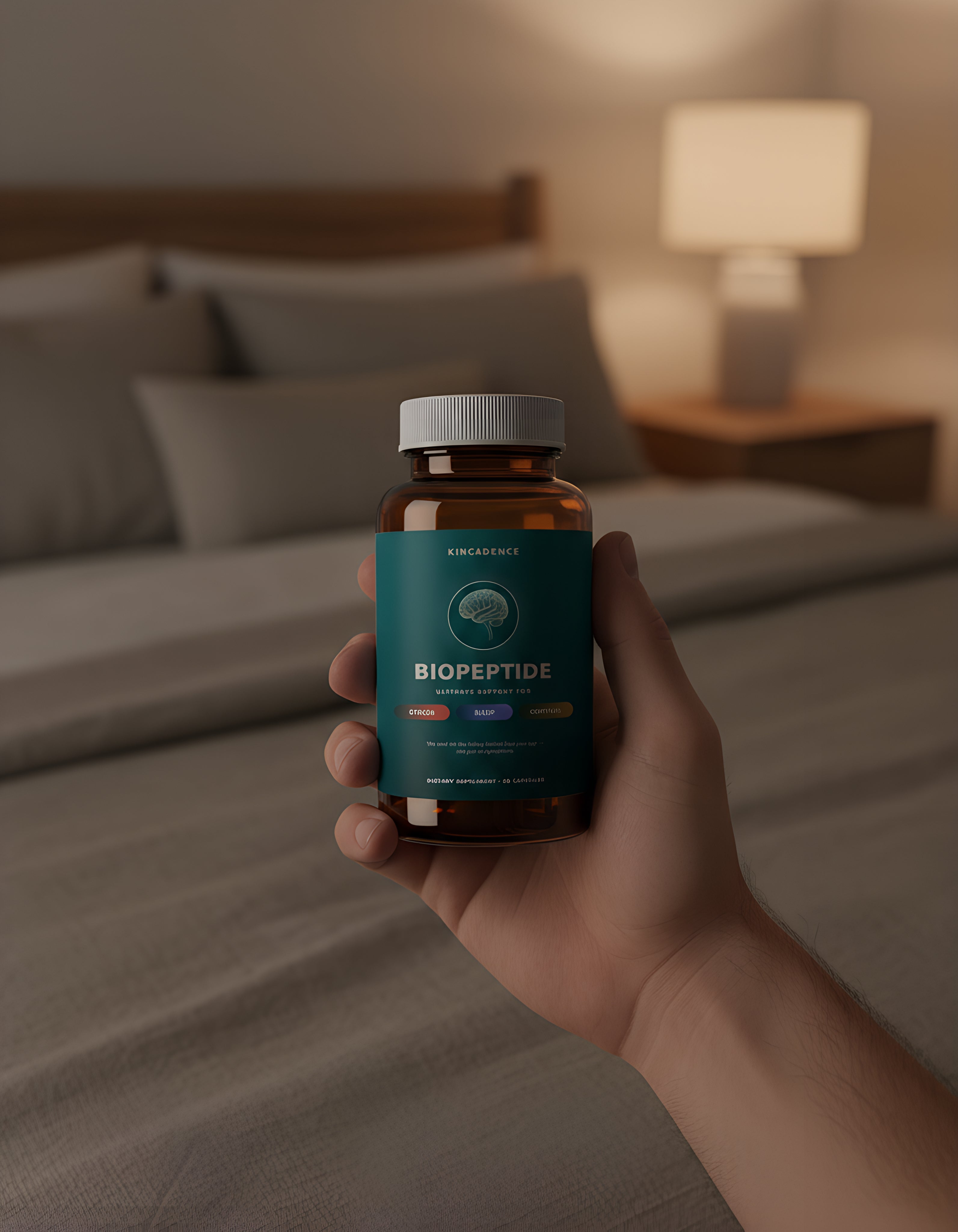
Our interest, stated up front
We make Biopeptide, an α-casozepine supplement, so we have a stake in this topic. We graded every option, including ours, by the same rules: how many human trials exist, how large and well run they are, whether results beat placebo, and what the safety record shows.
Why people look for an alternative
Melatonin is a timing signal. It is best supported for jet lag, and NIH says there is not enough strong evidence to recommend it for long-term trouble sleeping. Many people also want to avoid a nightly hormone, dislike the dose uncertainty (lab tests found gummies at 74% to 347% of their label, per Cohen et al., 2023), or find that what keeps them awake is stress rather than timing. Melatonin side effects covers the research in detail.
The options at a glance
| Option | Evidence | What the studies found | Watch out for |
|---|---|---|---|
| CBT-I (not a supplement) | Strong | In a meta-analysis of 20 trials, about 19 minutes faster to fall asleep and 26 minutes less time awake at night than no treatment | Takes several weeks; needs a course, app or therapist |
| L-theanine | Moderate | 200 mg a day for four weeks improved sleep-quality scores versus placebo in 30 healthy adults | Stress effects are modest; well tolerated |
| Oral lavender oil (standardized) | Moderate | Beat placebo in 5 trials of 1,213 people for tension and worry; the sleep benefit came almost entirely through that calming effect | Tested as one specific preparation, mostly in people with a diagnosed condition |
| Ashwagandha | Moderate | A small but significant improvement in overall sleep versus placebo across 5 trials, clearest at 600 mg a day or more for 8 weeks | Rare but serious liver-injury reports |
| α-casozepine (in Biopeptide) | Limited, encouraging | Fewer everyday stress symptoms at 150 mg for 30 days; faster sleep onset in a sleep laboratory at 300–600 mg; some measures no better than placebo | Contains milk; trials are small |
| Chamomile | Limited | Better sleep-quality scores in a small pooled analysis, but no difference from placebo in a trial of adults with long-term trouble sleeping | Mixed results |
| Passionflower | Limited | About 23 more minutes of laboratory-measured sleep than placebo in a 2-week trial of 110 adults, a borderline result | Small, short trials |
| Lemon balm | Limited | Two small placebo-controlled trials reported better sleep-quality or stress scores | Not yet repeated |
| Glycine | Limited | 3 g at bedtime reduced next-day fatigue after short nights in a very small study | Very little human data |
| Magnesium | Weak or mixed | A 2026 review of 12 trials found inconsistent, low-certainty evidence | Supplement upper limit 350 mg a day; diarrhea |
| Valerian | Weak or mixed | Umbrella reviews found no objective evidence that it improves sleep | Can add to the effect of sedating medicines |
| Tart cherry | Weak or mixed | A small pilot helped time awake at night; a later trial found no effect on any sleep measure | Low risk, food-based |
| GABA supplements | Weak | A 95-day placebo-controlled trial found no effect on sleep quality (a secondary measure) | Very little good data |
The first choice: CBT-I
Cognitive behavioral therapy for sleep is a short, structured program: the bed-is-for-sleep rule, a fixed wake time, a period of limited time in bed, and work on the thoughts that keep you awake. In a meta-analysis of 20 trials it cut the time to fall asleep by about 19 minutes and time awake at night by about 26 minutes compared with no treatment (Trauer et al., 2015), and the American Academy of Sleep Medicine strongly recommends it as the first approach for long-term trouble sleeping (Edinger et al., 2021). It is available through apps, online courses and specialists. Several of its techniques are in how to fall asleep fast.
L-theanine
An amino acid found in tea. In a four-week crossover trial of 30 healthy adults, 200 mg a day improved sleep-quality scores compared with placebo (Hidese et al., 2019). A 2026 meta-analysis of 31 trials found a modest effect on stress, partly driven by lower-quality studies, and a clearer effect on reaction time (Gerolymos et al., 2026). A 2026 review reports that 200 to 450 mg a day supports sleep quality without sedation (Cotter et al., 2026). More in L-theanine vs α-casozepine.
Oral lavender oil
One standardized oral lavender oil preparation beat placebo in five 10-week trials of 1,213 people on scores for tension and worry (Dold et al., 2023). In a re-analysis of one trial, almost all of its effect on sleep, 98%, ran through that calming effect rather than sedation (Seifritz et al., 2019). The limits: the trials were in people with a diagnosed condition, not everyday stress, they tested one specific product, and most were funded by its maker.
Ashwagandha
An herb used in Ayurvedic tradition. A meta-analysis of 5 placebo-controlled trials with 400 participants found a small but significant benefit for overall sleep, clearest at 600 mg a day or more for at least 8 weeks (Cheah et al., 2021). In a safety trial of 1,002 adults, 600 mg a day for 8 weeks caused no changes in liver tests compared with placebo (Pakhale et al., 2026).
But it carries a rare, serious risk. A 2026 review of published cases found 25 people with liver injury linked to ashwagandha, usually after weeks of use. Most recovered after stopping, but the outcomes included one liver transplant and three deaths in people who already had serious liver disease (McIntyre et al., 2026). If you take it, stop and see a doctor if you notice yellowing skin or eyes, itching or dark urine, and avoid it if you have any liver problem.
The limited-evidence group
- Chamomile: a small pooled analysis found better sleep-quality scores (Hieu et al., 2019), but a placebo-controlled trial in adults with long-term trouble sleeping found no difference in sleep diaries (Zick et al., 2011).
- Passionflower: in a 2-week trial of 110 adults, extract added about 23 minutes of laboratory-measured sleep compared with placebo, a borderline result, and other measures did not beat placebo (Lee et al., 2020).
- Lemon balm: two small placebo-controlled trials were positive (Di Pierro et al., 2024; Bano et al., 2023) but have not been repeated.
- Glycine: 3 g at bedtime reduced next-day fatigue after short nights in a very small study (Bannai et al., 2012).
Popular, but the evidence falls short
- Magnesium: a 2026 review of 12 trials found inconsistent, low-certainty evidence and did not support routine use for sleep (Lopresti et al., 2026). One small trial in older adults was positive (Abbasi et al., 2012). See magnesium vs α-casozepine.
- Valerian: reviews of the research found no objective evidence that it improves sleep (Valente et al., 2024; Ell et al., 2023), and it can add to the effect of sedating medicines (Mielczarek et al., 2026).
- Tart cherry: a small pilot helped time awake at night (Pigeon et al., 2010); a later trial found no effect on any sleep measure (Tucker et al., 2024).
- GABA supplements: a 95-day placebo-controlled trial found no effect on sleep quality, measured as a secondary outcome (de Bie et al., 2023).
Where α-casozepine fits, and why we chose it
α-casozepine is a peptide from milk protein that works with GABA-A receptors, the brain's main calming system. Its evidence base is small: five human trials. At 150 mg a day for 30 days it reduced everyday stress symptoms compared with placebo (Kim et al., 2007), and at 300 to 600 mg a day it shortened laboratory-measured time to fall asleep compared with placebo (Chang et al., 2024). In another trial some measures improved while others did not beat placebo (Kim et al., 2019). No trial has reported a pattern of side effects.
We chose it because it acts on the calming signal directly rather than the body clock, it is not a hormone or a sedative, it has been studied for both stress and sleep, and its safety record is clean. We would rather build on a small, clean evidence base and say so than make claims the research does not support. What is α-casozepine? lists every trial and its limits.
Biopeptide
Kincadence Biopeptide is one vegetable capsule a night with 150 mg of αS1-casein hydrolysate standardized to α-casozepine. It is melatonin-free and non-hormonal, and it contains milk. Take it 30 to 60 minutes before bed. Every order carries a 90-day money-back guarantee; the conditions are in our Refund Policy.
Whichever you try, check with your doctor first if you take prescription medicine, are pregnant or breastfeeding, or have a long-term health condition.
More from Kincadence Learn
α-casozepine vs melatonin
A hormone that sets your body clock versus a peptide that works with your calming system.
Read the article →CompareMagnesium vs α-casozepine
An essential mineral versus a calming milk peptide: what each does and what the sleep trials show.
Read the article →CompareL-theanine vs α-casozepine
The tea amino acid and the milk peptide: evidence, doses, and whether to combine them.
Read the article →The ingredientWhat is α-casozepine?
Where the milk peptide comes from, how it works with GABA, and what five human trials found.
Read the article →- Cohen PA, et al. JAMA. 2023;329(16):1401–1402. Quantity of melatonin and CBD in 25 melatonin gummy products sold in the US. PMID 37097362. Source
- Trauer JM, et al. Annals of Internal Medicine. 2015;163(3):191–204. Meta-analysis of cognitive behavioral therapy for long-term trouble sleeping. PMID 26054060. Source
- Edinger JD, et al. Journal of Clinical Sleep Medicine. 2021;17(2):255–262. American Academy of Sleep Medicine guideline on behavioral and psychological treatments for long-term trouble sleeping in adults. PMID 33164742. Source
- Hidese S, et al. Nutrients. 2019;11(10):2362. Randomized, placebo-controlled crossover trial of L-theanine 200 mg/day for four weeks in 30 healthy adults. PMID 31623400. Source
- Gerolymos C, et al. Molecular Psychiatry. 2026. Systematic review and meta-analysis of 31 randomized trials of L-theanine. PMID 42410082. Source
- Cotter J, et al. Frontiers in Nutrition. 2026;13:1922819. Review of human trials of L-theanine on cognition, mood and sleep. PMID 42761839. Source
- Dold M, et al. European Archives of Psychiatry and Clinical Neuroscience. 2023;273(7):1615–1628. Meta-analysis of five placebo-controlled trials of an oral lavender oil preparation. PMID 36717399. Source
- Seifritz E, et al. Journal of Psychiatric Research. 2019;115:69–74. Re-analysis of a placebo-controlled trial of oral lavender oil: how much of the sleep effect runs through calm. PMID 31121394. Source
- Cheah KL, et al. PLoS ONE. 2021;16(9):e0257843. Meta-analysis of five placebo-controlled trials of ashwagandha extract and sleep. PMID 34559859. Source
- Pakhale S, et al. Phytotherapy Research. 2026;40:5005–5015. Randomized, placebo-controlled safety trial of ashwagandha root extract 600 mg/day for 8 weeks in 1,002 adults. PMID 41943502. Source
- McIntyre D, et al. Cureus. 2026;18:e109764. Scoping review of published cases of liver injury associated with ashwagandha. PMID 42367407. Source
- Hieu TH, et al. Phytotherapy Research. 2019;33(6):1604–1615. Meta-analysis of chamomile trials. PMID 31006899. Source
- Zick SM, et al. BMC Complementary and Alternative Medicine. 2011;11:78. Pilot placebo-controlled trial of chamomile extract in adults with long-term trouble sleeping. PMID 21939549. Source
- Lee J, et al. International Clinical Psychopharmacology. 2020;35(1):29–35. Placebo-controlled trial of passionflower extract with laboratory-measured sleep in 110 adults. PMID 31714321. Source
- Di Pierro F, et al. Nutrients. 2024;16(23):4199. Placebo-controlled crossover trial of a lemon balm extract and sleep quality in 30 adults. PMID 39683592. Source
- Bano A, et al. Frontiers in Pharmacology. 2023;14:1250560. Placebo-controlled trial of a lemon balm extract (400 mg/day, 3 weeks) in 100 adults with everyday emotional distress. PMID 37927585. Source
- Bannai M, et al. Frontiers in Neurology. 2012;3:61. Glycine 3 g at bedtime and next-day fatigue after partial sleep restriction. PMID 22529837. Source
- Lopresti AL, et al. Journal of Dietary Supplements. 2026;23(5):553–581. Systematic review of 12 randomized trials of oral magnesium and sleep. PMID 42661485. Source
- Abbasi B, et al. Journal of Research in Medical Sciences. 2012;17(12):1161–1169. Placebo-controlled trial of magnesium 500 mg/day for 8 weeks in 46 older adults with poor sleep. PMID 23853635. Source
- Costello R, et al. Advances in Nutrition. 2023;14(5):973–982. Review of the supplemental magnesium upper limit of 350 mg/day. PMID 37487817. Source
- Valente V, et al. European Neuropsychopharmacology. 2024;82:6–28. Umbrella review of systematic reviews on herbal and nutritional products for sleep. PMID 38359657. Source
- Ell J, et al. Journal of Sleep Research. 2023;32(6):e13979. Umbrella review of non-drug treatments for long-term trouble sleeping. PMID 37527850. Source
- Mielczarek L, et al. Plants (Basel). 2026;15:2694. Review of the brain effects and safety of ginkgo, passionflower and valerian, including drug interactions. PMID 42739461. Source
- Pigeon WR, et al. Journal of Medicinal Food. 2010;13(3):579–583. Pilot placebo-controlled trial of tart cherry juice in older adults with poor sleep. PMID 20438325. Source
- Tucker RM, et al. Nutrients. 2024;16(23). Placebo-controlled crossover trial of Montmorency tart cherry capsules and sleep. PMID 39683518. Source
- de Bie THM, et al. The American Journal of Clinical Nutrition. 2023;118(3):708–719. Placebo-controlled trial of GABA supplements (1,500 mg/day) with sleep as a secondary outcome. PMID 37495019. Source
- Kim JH, et al. European Journal of Clinical Nutrition. 2007;61(4):536–541. Crossover, placebo-controlled trial of αS1-casein hydrolysate (150 mg/day, 30 days) on stress-related symptoms in 63 women. PMID 17136040. Source
- Chang C-H, et al. Clinical Nutrition. 2024. Randomized, double-blind, placebo-controlled 4-week trial of αS1-casein hydrolysate and sleep measured by polysomnography in 36 adults. PMID 39541860. Source
- Kim HJ, et al. Nutrients. 2019;11(7):1466. Double-blind, randomized, placebo-controlled crossover trial of αS1-casein hydrolysate (300 mg/day, 4 weeks per phase) and sleep in 48 adults. PMID 31252661. Source
These statements have not been evaluated by the Food and Drug Administration. This product is not intended to diagnose, treat, cure, or prevent any disease. Statements about α-casozepine reflect published research on the ingredient, not on the finished product.